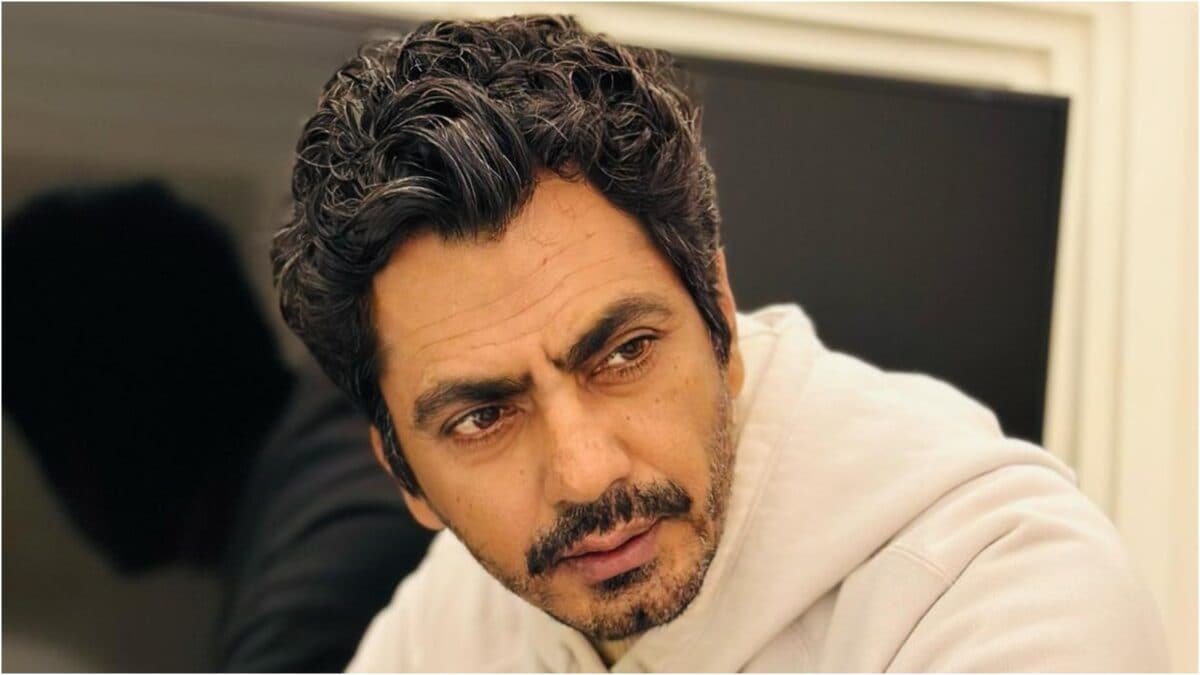
Nawazuddin Siddiqui has previously recalled the dramatic change in his career after Gangs of Wasseypur, saying the film’s success brought him around 150–200 film offers, with some makers even leaving scripts accompanied by blank cheques.
The revelation offers a striking contrast to the actor’s years of financial uncertainty, when he took on small and often uncredited roles simply to stay afloat in Mumbai.
From Small Roles to a Sudden Flood of Offers
Directed by Anurag Kashyap, Gangs of Wasseypur was released in two parts in 2012, with Siddiqui playing Faizal Khan. The role became a major turning point for the actor, who had spent years working in small parts across Hindi films and television.
Speaking about the period after the film’s success, Siddiqui said he suddenly found himself facing a very different problem: choosing which opportunities to accept.
“The struggle was to choose the best,” he recalled, according to a 2023 report that quoted his earlier remarks. He said he received around 150–200 film offers and that makers would leave scripts with blank cheques.
“They would say, ‘Put as much amount as you want but do the film’,” Siddiqui was quoted as saying.
The comments were significant because Siddiqui’s career had been defined by scarcity for much of the preceding decade. Suddenly, money was no longer the main barrier between him and work.
Why Siddiqui Did Not Sign Everything
Rather than immediately accepting the biggest financial offers, Siddiqui said he deliberately slowed down and focused on the quality of the projects.
In a 2018 Hindustan Times Brunch interview, he recalled receiving at least 250 film offers after Gangs of Wasseypur and said producers sent him blank cheques. He explained that the sudden success gave him the freedom to be more selective.
Siddiqui also said he had learned from the careers of established actors who had experienced rapid rises and subsequent falls. His concern was that signing too many projects simply because they were lucrative could damage the career he had spent years building.
Instead, he chose smaller films and waited for roles that interested him.
That approach was consistent with the way he had described acting throughout his career: the role and the character mattered more to him than the size of the cheque.
The Struggle Before Gangs of Wasseypur
The contrast with Siddiqui’s early years was stark.
He moved to Mumbai after working in theatre and taking on jobs to support himself. His early filmography included very small parts, including a brief appearance in Shool (1999), in which he played a waiter alongside Manoj Bajpayee and Raveena Tandon.
Siddiqui later recalled that survival, rather than stardom, was his immediate concern.
In an interview with Hindustan Times, he described walking for hours to Film City with a friend after hearing about an advertisement shoot that needed extras. The two eventually earned ₹2,500 each, but because they were not members of the junior artists’ association, Siddiqui said they had to hand over ₹1,000 each to the coordinator.
The remaining money was quickly spent on food and transportation. Siddiqui remembered the episode because it came after a long period without a proper meal.
The story illustrates how far removed his circumstances were from the blank-cheque offers that followed Gangs of Wasseypur.
His First Paycheque Meant Something Different
Siddiqui has also spoken about an even earlier payment from his days performing street plays as part of an advertising campaign in Delhi.
At the 2026 Bollywood Hungama Style Icons Summit and Awards, he recalled that the group travelled around Delhi in a van and performed street plays to advertise an oil brand. He said they could stage mock arguments to attract a crowd before beginning the performance.
Siddiqui said his first cheque from that work went to his mother because she had previously loaned her jewellery. He recalled earning roughly ₹500–₹600 from five or six shows, with each show paying ₹100.
That first payment therefore had a very different significance from the blank cheques he would encounter years later. One helped his family recover jewellery; the others represented the professional freedom that came after years of uncertainty.
Gangs of Wasseypur Changed the Equation
Siddiqui’s rise was not an overnight transformation in the literal sense. He had already spent years building a reputation through theatre, independent cinema, and supporting performances.
But Gangs of Wasseypur gave him a level of visibility that changed the kinds of opportunities coming his way.
He later described the film as his first real experience of stardom. The sudden influx of scripts and offers meant he could finally make choices rather than simply accept whatever work was available. Times of India reported in 2018 that Siddiqui said there were occasions when blank cheques were placed on his table, but he chose not to sign those projects.
That decision became an important part of his career philosophy.
For an actor who had once worried about getting enough work to eat, the ability to reject a lucrative offer in favour of a stronger role represented a fundamental change.
Why the Story Still Matters
Siddiqui’s blank-cheque anecdote is less about the amount of money involved than about how dramatically his position in the industry had changed.
Before Gangs of Wasseypur, he had spent years pursuing even the smallest opportunities. After the film, he was receiving scripts from filmmakers prepared to let him name his price.
Yet he has repeatedly maintained that money alone was not the reason he chose a project.
That distinction has remained central to the actor’s public account of his career: success gave him more choices, but the challenge of playing a compelling character remained the deciding factor.